• In the world of anesthesia, precision and patient-centered care go hand in hand — and the popliteal nerve block is a perfect example of both. This regional anesthesia technique provides targeted pain relief for procedures involving the lower leg, ankle, and foot, often minimizing the need for systemic opioids and enhancing postoperative comfort.

    Clinical Overview

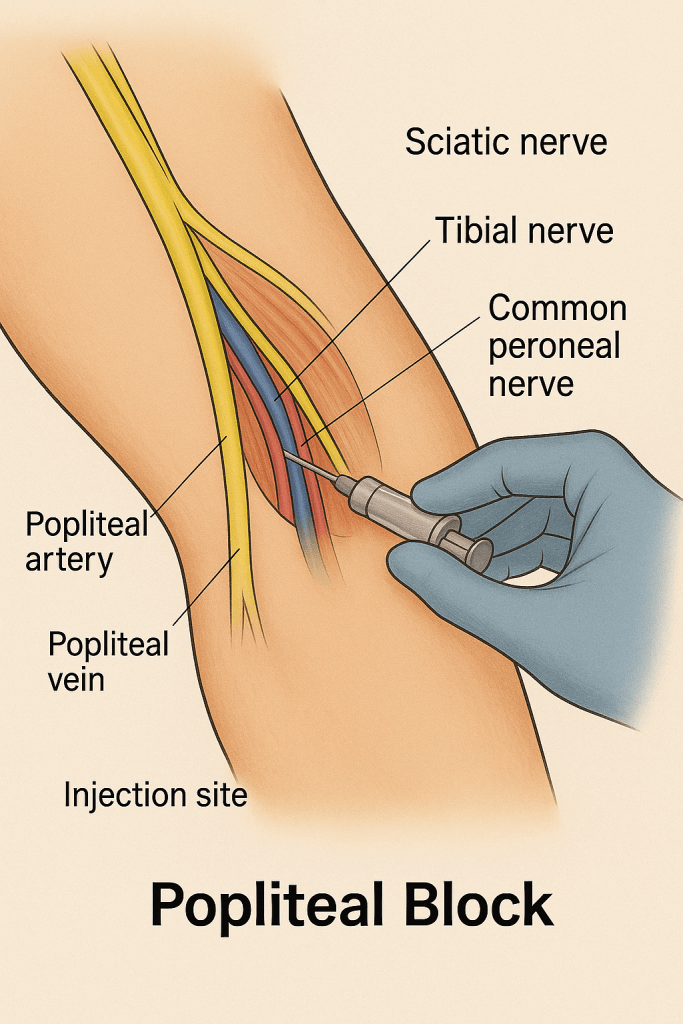
    The popliteal nerve block targets the sciatic nerve in the popliteal fossa, just proximal to its bifurcation into the tibial and common peroneal nerves.

    Common indications include:

    • Achilles tendon repair

    • Bunionectomy

    • Foot and ankle surgery

    • Calf or lower leg soft tissue procedures

    Performed with ultrasound or nerve stimulator guidance, this block delivers effective analgesia and anesthesia to the distal lower extremity — while preserving quadriceps strength, allowing for earlier mobilization.

    Coding and Documentation Insight

    Proper coding ensures compliance and accurate reimbursement. The CPT® code 64445 represents:

    Injection, anesthetic agent; sciatic nerve, single

    If the block is performed postoperatively for pain control, and not as the primary anesthetic, it is reported separately from the anesthesia service.

    Coding tips:

    • Append modifier -59 when the block is distinct from the intra-operative anesthesia service.

    • Always link to a postoperative pain diagnosis such as G89.18 (Other acute postoperative pain).

    Documentation should include:

    • Anatomical site and laterality

    • Indication (postoperative pain vs surgical anesthesia)

    • Technique (ultrasound-guided, nerve stimulator)

    • Local anesthetic and volume used

    • Evidence of patient tolerance and effectiveness

    Make sure that MAC is not the anesthesia technique. If so, then the Popliteal is part of the anesthetic and not allowed to be billed a post op pain block.

    Ensure that you understand the difference between the Popliteal and Saphenous (64450) as well as Saphenous (64447)
    Disclaimer:
    Chart Talk: Anesthesia Coding Conversations is intended for educational and informational purposes only. The content shared does not constitute legal, billing, compliance, or reimbursement advice. Coding, billing, and reimbursement decisions should be based on official sources such as CPT®, ICD-10-CM, ASA guidelines, payer policies, and individual facility policies, as well as the specific documentation in the medical record. Users are encouraged to consult authoritative resources and/or their compliance department for guidance applicable to their organization.

  • Post-operative nerve blocks are a valuable component of anesthesia care — enhancing patient comfort, reducing opioid use, and supporting faster recovery. But from a coding and billing standpoint, clarity is key.

    CPT 64447 = Injection, anesthetic agent; femoral nerve, single

    This code is commonly used when documenting post-operative analgesia for knee and lower-extremity procedures. However, the challenge often lies in how these blocks are documented and referenced in the anesthesia record or operative note.

    • You might see it referred to as:
    • Femoral nerve block
    • Adductor canal block
    • Saphenous nerve block

    Key Reminders:

    • Ensure documentation supports the nerve targeted and that it was performed separately from the surgical anesthesia.

    • Append modifier -59 when the block is distinct from the intra-operative anesthesia service.

    When properly documented, these blocks not only improve patient care — they reflect the full scope of anesthesia services provided.

    Question for my anesthesia coders and providers:

    What’s your most common documentation challenge when reporting post-operative blocks?

    #AnesthesiaCoding #MedicalCoding #AnesthesiaBilling #RegionalAnesthesia #PostOpPainManagement #Compliance #RevenueIntegrity

    Disclaimer:
    Chart Talk: Anesthesia Coding Conversations is intended for educational and informational purposes only. The content shared does not constitute legal, billing, compliance, or reimbursement advice. Coding, billing, and reimbursement decisions should be based on official sources such as CPT®, ICD-10-CM, ASA guidelines, payer policies, and individual facility policies, as well as the specific documentation in the medical record. Users are encouraged to consult authoritative resources and/or their compliance department for guidance applicable to their organization.

  • A genicular nerve block (CPT 64454) is a minimally invasive procedure for chronic knee pain, particularly from osteoarthritis or after knee replacement surgery. It involves injecting a local anesthetic near the genicular nerves – a network of sensory nerves that transmit pain signals from the knee joint to the brain.

    The three primary targets are:
    Superior lateral vehicular nerve (SLGN)
    Superior medial vehicular nerve (SMGN)
    Inferior medial vehicular nerve (IMGN)

    A VI block (vastus intermedius) is a specific type of injection that can be included in a more comprehensive genicular nerve block to treat knee pain. A standard genicular nerve block target three main genicular nerves, but advanced versions may include the VI for broader pain coverage.

    Disclaimer:
    Chart Talk: Anesthesia Coding Conversations is intended for educational and informational purposes only. The content shared does not constitute legal, billing, compliance, or reimbursement advice. Coding, billing, and reimbursement decisions should be based on official sources such as CPT®, ICD-10-CM, ASA guidelines, payer policies, and individual facility policies, as well as the specific documentation in the medical record. Users are encouraged to consult authoritative resources and/or their compliance department for guidance applicable to their organization.