Hi! My name is Dianne C. Moseley. I’m a healthcare professional with over 32 years of experience in revenue cycle management. Throughout my career, I’ve worked in every area of RCM, gaining a true understanding of how each part connects to the bigger picture.
I am currently certified through AAPC with my CPC, CPCO, CPMA, and CANPC.
For the past 15 years, I’ve focused my expertise on anesthesia — a specialty I’m deeply passionate about. I currently work with a large anesthesia group, as a Senior Auditor serving as a Subject Matter Expert, where I focus on optimizing coding accuracy, compliance, education, and revenue integrity. My passion lies in education, process improvement and helping others to succeed.
This blog is a space where I will share practical insights, tips, and real-world guidance on anesthesia coding. My goal is to make complex concepts clear, support continuous learning, and help others feel confident navigating the anesthesia coding landscape.
Many people don’t realize that AAPC offers a Mentor/Mentee Program. I’m proud to say that I am signed up as an AAPC Mentor, and I would love to connect with and support others in achieving their goals—whether that’s certification guidance, career direction, or simply encouragement from someone who’s been there. Or maybe you would like to be a Mentor. Please go and check it out.
Instead of our traditional newsletter, I’m sharing a Coding Tip Sheet—a concise, one-two page resource focused on practical guidance, common pitfalls, and documentation reminders you can use right away.
This approach allows us to deliver clear, actionable education in a format that’s easy to reference and save.
DISCLAIMER: Chart Talk: Anesthesia Coding Conversations is intended for educational and informational purposes only. The information presented reflects the sole interpretation and professional opinion of the presenter. It does not represent the views or official guidance of my employer, the Centers for Medicare & Medicaid Services (CMS), the American Medical Association (AMA), or any other regulatory or governing body.
Every reasonable effort has been made to ensure the accuracy of the information provided at the time of publication. However, coding guidelines, regulations, and payer policies are subject to change. It is the responsibility of the reader or participant to verify current guidance and apply professional judgment when making coding and billing decisions.
The start of a new year is the perfect time to reset habits, refine processes, and strengthen the foundation of accurate anesthesia coding. When it comes to clean claims and compliant billing, one truth remains constant:
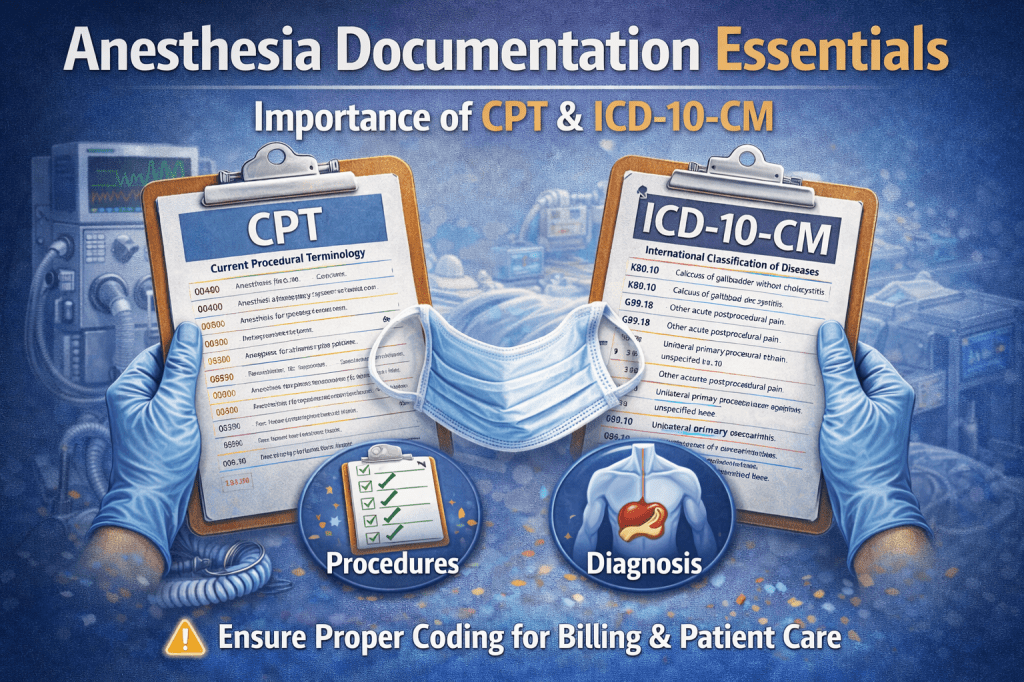
CPT accuracy starts with ICD-10-CM.
While anesthesia coding often focuses heavily on time, units, and modifiers, none of that matters if the underlying diagnosis does not clearly support the service provided.
🔗 Why ICD-10-CM Is the Foundation of Anesthesia CPT Coding
Every anesthesia claim tells a story—and ICD-10-CM codes set the stage. They explain why anesthesia was medically necessary and how complex the patient’s condition truly was.
Strong diagnosis documentation supports:
Appropriate anesthesia CPT code selection
Medical necessity for the procedure
Risk stratification and ASA status
Audit defensibility
Without clear, specific diagnoses, even perfectly calculated anesthesia time can be challenged.
📌 Common Documentation Gaps That Impact CPT Accuracy
Many anesthesia documentation issues are not coding errors—they’re documentation gaps. Some of the most common include:
Vague diagnoses such as “abdominal pain” or “back pain” without specificity
Chronic conditions listed in the history but missing from the final assessment
Comorbidities documented but not linked to anesthesia risk
Discrepancies between the surgeon’s diagnosis and the anesthesia record
These gaps make it difficult to assign accurate ICD-10-CM codes, which can ultimately affect CPT code support and reimbursement.
🧠 Linking Diagnosis → Procedure → Anesthesia CPT
Accurate anesthesia coding requires alignment across the entire record:
Diagnosis (ICD-10-CM) What condition or disease prompted the procedure?
Procedure (Surgical CPT) What service was performed that required anesthesia?
Anesthesia CPT Code Does the anesthesia code align with the procedure and patient condition?
When these elements tell the same story, claims are stronger and audits are easier to defend.
⚠️ Diagnosis Specificity Matters More Than You Think
ICD-10-CM specificity isn’t just a surgical concern—it directly impacts anesthesia services. Detailed diagnoses help reflect:
Increased patient risk
Complexity of care
Need for heightened monitoring or intervention
For example, documenting controlled vs. uncontrolled conditions, acute vs. chronic status, or complications can make a meaningful difference in how the case is reviewed.
📋 Documentation Tips for a Strong Start to 2026
As we move into the new year, consider these best practices:
Ensure diagnoses are carried through from pre-op to final assessment
Capture all clinically relevant comorbidities impacting anesthesia care
Encourage consistency between surgeon and anesthesia documentation
Audit records for diagnosis clarity—not just time and units
Small improvements in documentation can have a big impact on CPT accuracy.
💬 Let’s Start the Conversation
As we begin 2026, take a moment to reflect:
👉 If you could improve one anesthesia documentation issue this year, what would it be?
Drop a comment, reply to this post, or share your experience. Your insight may help another coder, auditor, or provider strengthen their documentation practices.
Here’s to a year of clean claims, strong documentation, and continued growth in anesthesia coding.
DISCLAIMER: Chart Talk: Anesthesia Coding Conversations is intended for educational and informational purposes only. The information presented reflects the sole interpretation and professional opinion of the presenter. It does not represent the views or official guidance of my employer, the Centers for Medicare & Medicaid Services (CMS), the American Medical Association (AMA), or any other regulatory or governing body.
Every reasonable effort has been made to ensure the accuracy of the information provided at the time of publication. However, coding guidelines, regulations, and payer policies are subject to change. It is the responsibility of the reader or participant to verify current guidance and apply professional judgment when making coding and billing decisions.
The first week of a new year always feels a little different, doesn’t it? A fresh calendar. New goals. New possibilities.
As anesthesia coders, auditors, and educators, our field is constantly evolving—and staying current takes intention. So I want to hear from you:
👉 How do you plan to make 2026 your best year yet?
Are you:
🎓 Working toward a new certification?
📚 Enrolling in a course or training to strengthen your skills?
🧠 Focusing on mastering a specific area of anesthesia coding or compliance?
💡 Exploring education, teaching, or leadership opportunities?
⚖️ Prioritizing work-life balance while still growing professionally?
There’s no “right” answer here—growth looks different for everyone. Some years are about pushing forward. Others are about refining what you already know. Both matter.
Drop a comment, reply to this post, or send a message and share what’s on the horizon for you in 2026. Your goals may inspire someone else who’s standing at the same starting line.
Here’s to a year of learning, growth, and supporting one another along the way. Let’s make 2026 a strong one—together. 💙
It was the year I finally slowed down enough to ask myself some very hard questions:
Am I truly happy in my job?
Am I fulfilled by the company and management I work with?
Am I satisfied with my certifications and where my career is headed?
Where do I see myself in one year? Five years?
Some of the answers I uncovered weren’t what I expected. And honestly, it took nearly the entire year before I fully realized what was missing.
What I learned is this: I hadn’t been thinking about me.
Once that realization set in, things began to shift. I started making intentional changes. I clearly defined what I wanted to accomplish for myself—not what was expected of me, not what felt “safe,” but what actually brought me purpose and joy.
Despite all of its ups and downs, 2025 ended on a really good note. I launched my blog and began welcoming subscribers. I earned an additional certification. I enrolled in the AAPC Instructor Course. Most importantly, I gained clarity—clarity about my goals, my direction, and my why.
With a renewed vision, I’m stepping into 2026 with new expectations and new opportunities. I know that pursuing dreams doesn’t happen overnight. There will be setbacks, and that’s okay. It’s not a race. Growth happens one step at a time, as long as we keep moving forward and continue doing the things that bring us fulfillment.
That brings me to something I want to share with you.
Many people don’t realize that AAPC offers a Mentor/Mentee Program. I’m proud to say that I am signed up as an AAPC Mentor, and I would love to connect with and support others in achieving their goals—whether that’s certification guidance, career direction, or simply encouragement from someone who’s been there.
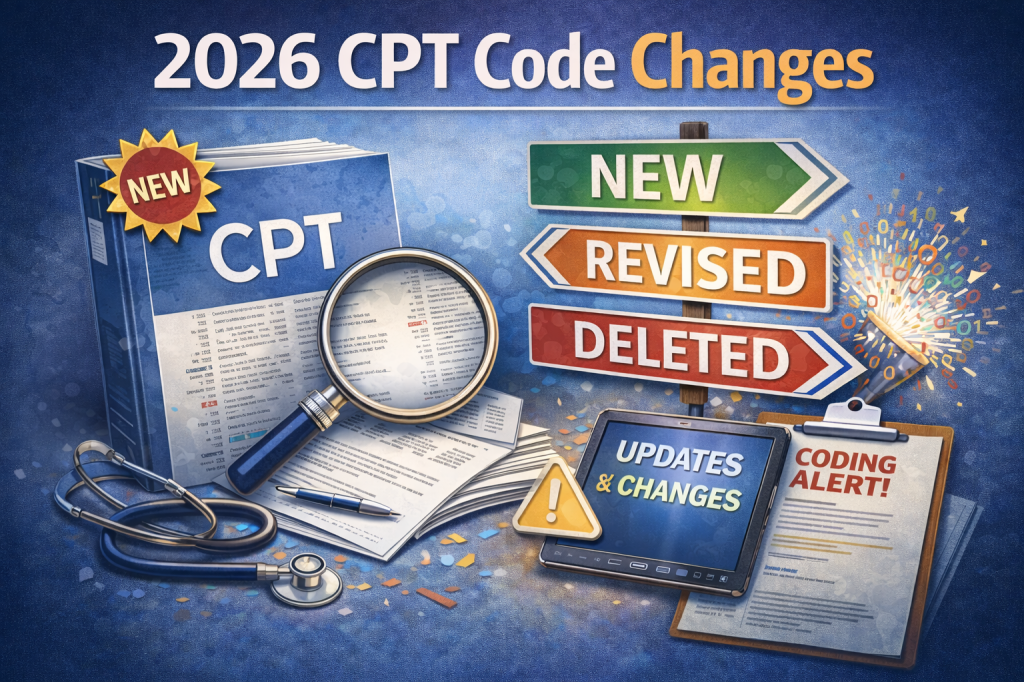
As we move closer to 2026, it’s time to start looking ahead at the upcoming CPT® code changes and what they mean for providers, coders, and revenue cycle teams. Each annual update reflects how healthcare continues to evolve—and the 2026 CPT code set is no exception.
Whether you’re involved in coding, billing, compliance, or clinical documentation, understanding the overall direction of these changes can help you prepare early and avoid last-minute surprises.
A High-Level Look at the 2026 CPT® Updates
The 2026 CPT® code set includes a combination of new, revised, and deleted codes across multiple specialties. As with prior years, the intent is to improve accuracy, reflect current clinical practice, and better align reporting with how care is actually delivered.
Rather than focusing on volume alone, the 2026 updates emphasize:
Greater specificity
Clearer code descriptors
Improved alignment with technology-driven care
Reduced ambiguity that can lead to denials or inconsistent reporting
Key Themes Driving the 2026 CPT® Changes
1. Expansion of Digital and Remote Services
Digital health continues to grow, and CPT® codes are evolving to keep pace. Updates for 2026 further refine reporting for remote patient monitoring (RPM) and related management services, including clearer guidance around monitoring duration and time-based thresholds.
These changes aim to:
Better define short-term vs. ongoing monitoring
Clarify time requirements for treatment management
Improve consistency in reporting remote services
2. Increased Use of Technology and Augmented Intelligence
The 2026 CPT® updates acknowledge the expanding role of advanced technology and algorithm-assisted analysis in clinical care. New and revised codes capture services where clinicians use advanced tools to support interpretation, decision-making, and diagnostic insight.
This is an important step toward recognizing how technology enhances—but does not replace—clinical judgment.
3. Updates in Procedural and Interventional Coding
Several procedural areas see refinement in 2026, particularly where prior coding structures lacked clarity or failed to reflect procedural complexity.
Expect updates that:
Improve differentiation between procedural approaches
Clarify bundled versus separately reportable services
Align code descriptors more closely with current techniques
These refinements are especially important for accurate documentation and audit defense.
4. Continued Emphasis on Documentation Clarity
Across the code set, there is a noticeable focus on clearer definitions and parenthetical guidance. This includes refined descriptors, updated instructional notes, and clearer expectations for reporting.
For coders and auditors, this means:
Less reliance on interpretation
More consistency across teams
Stronger support for compliant billing
What This Means for Coders and Practices
With an effective date of January 1, 2026, preparation is key. Now is the time to:
Review new, revised, and deleted codes relevant to your specialty
Update internal references, cheat sheets, and education materials
Begin conversations with clinicians about documentation expectations
Ensure systems and workflows are ready to support the changes
Early education and proactive planning can significantly reduce claim delays, denials, and rework once the new code set goes live.
Looking Ahead
The 2026 CPT® code changes reflect a broader shift in healthcare—one that values precision, technology integration, and documentation that tells the full story of patient care.
In upcoming posts, we’ll take a deeper dive into specialty-specific updates, highlight high-impact changes, and share practical tips for applying the new codes confidently.
If there’s a specific area you’d like covered in addition to anesthesia – such as cardiovascular services, or another specialty—I’d love to hear your suggestion. Remember in order to ensure that we have the correct crosswalk, it al begins with the CPT code.
DISCLAIMER: Chart Talk: Anesthesia Coding Conversations is intended for educational and informational purposes only. The information presented reflects the sole interpretation and professional opinion of the presenter. It does not represent the views or official guidance of my employer, the Centers for Medicare & Medicaid Services (CMS), the American Medical Association (AMA), or any other regulatory or governing body.
Every reasonable effort has been made to ensure the accuracy of the information provided at the time of publication. However, coding guidelines, regulations, and payer policies are subject to change. It is the responsibility of the reader or participant to verify current guidance and apply professional judgment when making coding and billing decisions.
If you’ve noticed things have been a bit quiet here lately, I wanted to take a moment to share why—and what’s coming next.
Between the holidays, a very full work schedule, and the day-to-day demands that come with both, posting took a short pause. That said, the quiet hasn’t meant inactivity. Behind the scenes, there’s been a lot of reflection, planning, and learning.
I’m still new to blogging and very much in the “figuring it out” phase—learning what works, what doesn’t, and how to create content that’s not only informative but truly useful to you. Part of that process is understanding how you prefer to engage:
What topics help you most?
What formats do you enjoy—quick tips, deep dives, visuals, real-world examples?
How can this space better support your learning and growth?
Looking ahead, 2026 is shaping up to be an exciting and education-focused year. My goal is to bring more intentional, practical, and approachable content—especially around topics that help simplify complex concepts and support continued learning.
I’m always open to suggestions and feedback. If there’s something you’d like to see covered, explained differently, or expanded on, please don’t hesitate to share. This blog is meant to grow with you, not just in front of you.
Thank you for your patience, your support, and for being part of this journey. I’m looking forward to what’s ahead—and I’m glad you’re here.
Disclaimer: Chart Talk: Anesthesia Coding Conversations is intended for educational and informational purposes only. The content shared does not constitute legal, billing, compliance, or reimbursement advice. Coding, billing, and reimbursement decisions should be based on official sources such as CPT®, ICD-10-CM, ASA guidelines, payer policies, and individual facility policies, as well as the specific documentation in the medical record. Users are encouraged to consult authoritative resources and/or their compliance department for guidance applicable to their organization.
I wanted to check in with the community—is anyone currently preparing for the CANPC (Certified Anesthesia and Pain Management Coder) exam? If so, I’d love to hear from you!
Studying for CANPC can feel overwhelming at times. Between mastering anesthesia time, navigating ASA crosswalks, understanding pain management interventions, and keeping up with evolving guidelines, there’s a lot to juggle. But we don’t have to do it alone.
What are you finding most challenging? – Anesthesia coding concepts? – Interventional pain procedures? – Nerve blocks and imaging guidance? – Modifiers? – Time calculations? – Exam strategy?
Drop a comment below and share what you’re struggling with — or even a tip that has helped you. Together, we can create a supportive space for everyone on their CANPC journey.
Let’s learn from each other and encourage one another to keep going.
• Fixed amount—does not change with case duration.
2. Time Units
• Begins when anesthesia care starts; ends when no longer personally providing services.
• Most payers: 1 unit = 15 minutes.
• Medicare: billed based on actual minutes.
How to calculate and report anesthesia time properly depends on the payer. For payers that follow CPT® rules, report time per 15minute intervals. At least half this time (7.5 minutes) must pass to report a unit. For example:
30 minutes of anesthesia = two units (30=15+15)
38 minutes of anesthesia = three units (38=15+15+8)
37 minutes of anesthesia = two units (37=15+15+7)
Medicare providers follow Centers for Medicare & Medicaid Services guidelines, found in the Internet Only Manual, Claims Processing
Manual 100-04 Chapter 12:
G. Anesthesia Time … is defined as the period during which an anesthesia practitioner is present with the patient. It startswhen the anesthesia practitioner begins to prepare the patient for anesthesia services in the operating room or an equivalentarea and ends when the anesthesia practitioner is no longer furnishing anesthesia services to the patient, that is, when thepatient may be placed safely under postoperative care. Anesthesia time is a continuous time period from the start ofanesthesia to the end of an anesthesia service. In counting anesthesia time for services furnished on or after January 1, 2000,the anesthesia practitioner can add blocks of time around an interruption in anesthesia time as long as the anesthesiapractitioner is furnishing continuous anesthesia care within the time periods around the interruption.Actual anesthesia time in minutes is reported on the claim. For anesthesia services furnished on or after January 1, 1994, theA/B MAC computes time units by dividing reported anesthesia time by 15 minutes. Round the time unit to one decimal place.The A/B MAC does not recognize time units for CPT codes 01995 or 01996.For purposes of this section, anesthesia practitioner means a physician who performs the anesthesia service alone, a CRNAwho is not medically directed, or a CRNA or AA, who is medically directed. The physician who medically directs the CRNA orAA would ordinarily report the same time as the CRNA or AA reports for the CRNA service.
Disclaimer: Chart Talk: Anesthesia Coding Conversations is intended for educational and informational purposes only. The content shared does not constitute legal, billing, compliance, or reimbursement advice. Coding, billing, and reimbursement decisions should be based on official sources such as CPT®, ICD-10-CM, ASA guidelines, payer policies, and individual facility policies, as well as the specific documentation in the medical record. Users are encouraged to consult authoritative resources and/or their compliance department for guidance applicable to their organization.