In the world of anesthesia, precision and patient-centered care go hand in hand — and the popliteal nerve block is a perfect example of both. This regional anesthesia technique provides targeted pain relief for procedures involving the lower leg, ankle, and foot, often minimizing the need for systemic opioids and enhancing postoperative comfort.
Clinical Overview
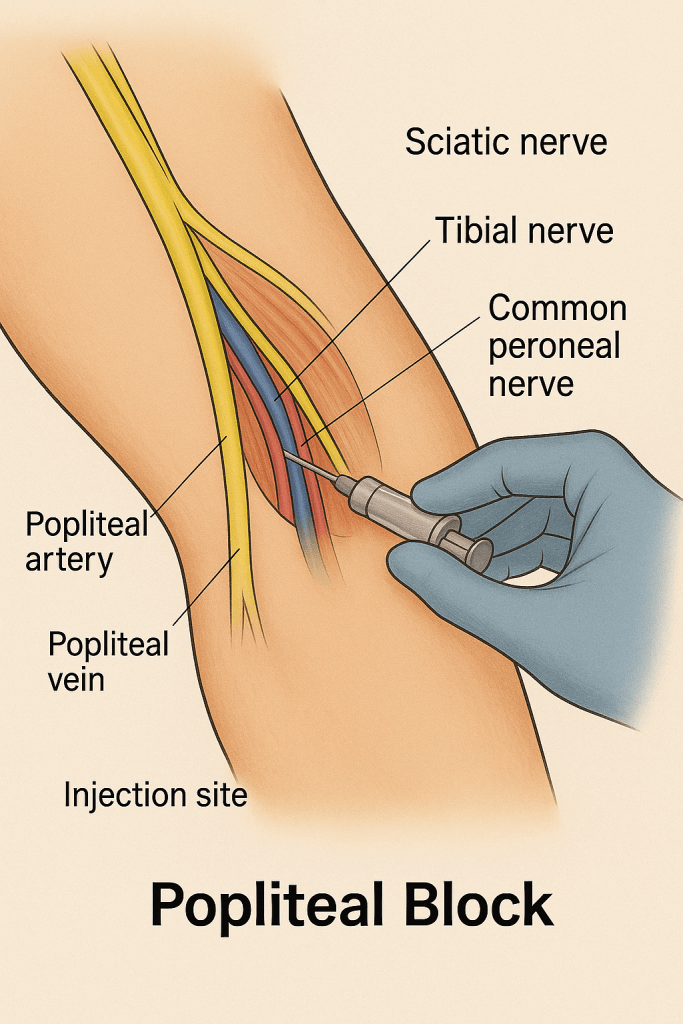
The popliteal nerve block targets the sciatic nerve in the popliteal fossa, just proximal to its bifurcation into the tibial and common peroneal nerves.
Common indications include:
• Achilles tendon repair
• Bunionectomy
• Foot and ankle surgery
• Calf or lower leg soft tissue procedures
Performed with ultrasound or nerve stimulator guidance, this block delivers effective analgesia and anesthesia to the distal lower extremity — while preserving quadriceps strength, allowing for earlier mobilization.
Coding and Documentation Insight
Proper coding ensures compliance and accurate reimbursement. The CPT® code 64445 represents:
Injection, anesthetic agent; sciatic nerve, single
If the block is performed postoperatively for pain control, and not as the primary anesthetic, it is reported separately from the anesthesia service.
Coding tips:
• Append modifier -59 when the block is distinct from the intra-operative anesthesia service.
• Always link to a postoperative pain diagnosis such as G89.18 (Other acute postoperative pain).
Documentation should include:
• Anatomical site and laterality
• Indication (postoperative pain vs surgical anesthesia)
• Technique (ultrasound-guided, nerve stimulator)
• Local anesthetic and volume used
• Evidence of patient tolerance and effectiveness
Make sure that MAC is not the anesthesia technique. If so, then the Popliteal is part of the anesthetic and not allowed to be billed a post op pain block.
Ensure that you understand the difference between the Popliteal and Saphenous (64450) as well as Saphenous (64447)
Disclaimer:
Chart Talk: Anesthesia Coding Conversations is intended for educational and informational purposes only. The content shared does not constitute legal, billing, compliance, or reimbursement advice. Coding, billing, and reimbursement decisions should be based on official sources such as CPT®, ICD-10-CM, ASA guidelines, payer policies, and individual facility policies, as well as the specific documentation in the medical record. Users are encouraged to consult authoritative resources and/or their compliance department for guidance applicable to their organization.

Leave a comment